


Bathroom tile: how to choose it and what it costs in Chisinau
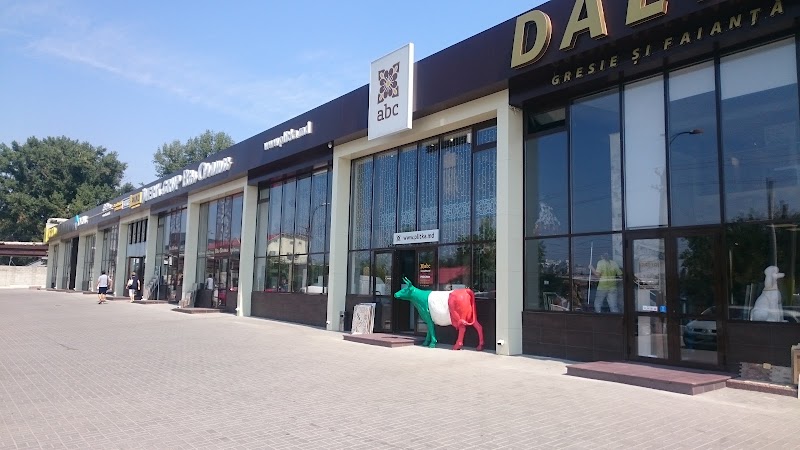
In a shop on Uzinelor street, a woman spent about ten minutes choosing between two grey tiles that looked almost identical. The salesman asked where she was putting them, floor or wall. She said both. That answer already meant one of the two tiles was wrong for her, whatever the colour or the price.
Bathroom tile is usually treated as a matter of taste: find something nice, preferably cheap. In practice several technical decisions come before colour, and they are what determine whether you are happy with the result a year later. The shop is the last step, not the first. Once you know what you are looking for, you can buy it in a dozen places around Chisinau and the difference will be price and service. If you don’t know, the biggest showroom in town won’t help.
Here they are, in the order the decisions actually get made.
First decision: gresie or faianta
These are two different materials, even though they sit on neighbouring racks and look alike. In Moldova you will see both words on every shop sign, so it helps to know which is which.
Faianta is wall tile. It is porous, absorbs more than 10 per cent water, has a soft body and cuts easily. It costs less, and it belongs on walls only.
Gresie portelanata is porcelain stoneware. Fired hotter, it absorbs under half a per cent of water, carries weight, survives frost and works on floors, thresholds and balconies. The packaging shows it as group BIa; wall tile is BIII.
Wall tile laid on a floor is the most common story with a bad ending. First the corners chip near the bath, then a crack appears exactly where people step most. The reverse causes no trouble at all: porcelain goes on a wall perfectly well, it is simply more expensive and harder to fit.
Second: the surface
The bathroom is the only room in a home where people walk barefoot on a wet floor. That is why tiles carry a slip rating, and it is worth asking about before you settle on a shade.
R9–R13 ratings describe footwear testing; A–C classes come from a separate wet barefoot test. The scales are not interchangeable: R10 alone does not establish suitability for a shower. Check the manufacturer’s recommendation for the exact area and both test results. Example of separate ratings: Marazzi.
Polished porcelain looks expensive under showroom lights. On a wet floor it behaves like an ice rink. If you want the shine, put it on the wall and take matt or structured tile for the floor.
The shower area is its own case. That is where most of the water goes, and what holds your foot is not so much the tile as the grout lines between tiles. A small format or mosaic on a shower floor is safer than one large slab, simply because there are more joints.
Third: the size
Large format is fashionable, and in a small bathroom it genuinely works: fewer joints, less visual clutter, the room reads as slightly bigger. It comes at a cost, and not only in lei.
A 60 by 120 slab weighs around sixteen kilograms and needs a perfectly flat substrate. Any unevenness in the wall shows up as a step between tiles. It is awkward to fit alone and requires a cutter with suitable cutting length and capacity for the exact tile. If your installer says he has not worked with that format, that is a reason either to change the format or to change the installer.
Ask in advance whether the shop cuts tile to size. In Chisinau not every shop does, and for large format it changes things: a workshop cut is more accurate and safer than one made on site.
Calibre and shade: what nobody warns you about
Ceramic shrinks when fired, and the shrinkage differs from batch to batch. That is why finished tile is sorted by calibre, meaning its actual size, and by shade, the tone of that particular glaze run. Both are printed on the edge of the box in small figures, next to the product code.
A review left for one Chisinau shop describes exactly this: of a 60 by 120 batch, roughly 40 per cent of the tiles measured five millimetres less than the declared size. A review alone cannot establish whether tolerances were met: box markings, the technical specification and measurements are needed. The problem is that two calibres ended up in one room. The joint starts to wander, and along a long wall you can see it without any instrument.
Shade is simpler and more annoying. Two boxes of the same product code from different batches can differ enough in tone that the wall reads as patchy. In the shop, under bright light, the difference is almost invisible.
Hence two rules. Buy the whole quantity at once, from a single batch. And before paying, spend half a minute comparing calibre and shade on every box brought out from the warehouse. Counting on picking up two more boxes from the same batch a month later is not realistic.
How much to buy
Installers usually estimate the area by eye, but it is better to calculate it yourself, if only to know what you are paying for offcuts. Add ten per cent to the area for a straight layout, fifteen for diagonal or large format, where the waste pieces are bigger and more often useless. Floor and walls are calculated separately.
Keep two whole tiles after the work is done. A year later, a dropped tap or a misplaced drill turns that spare into half an hour of work instead of a hunt for a discontinued collection.
What gets bought along with the tile
The bill usually grows at the till, when it turns out that tile comes with a list of other things. Better to know about them in advance.
Adhesive is chosen by format and substrate. Ordinary wall tile is fine with class C1; porcelain and large format need C2. It says so on the bag. The economics here are odd: adhesive costs a fraction of the tile, while a tile that falls off costs the whole wall.
Waterproofing goes under the tile in the shower area and on the floor around the bath. Tile does not hold water; whatever sits underneath does. That layer is invisible, which is why it is the one most often skipped, and people remember it when the neighbours downstairs ring the doorbell.
Grout comes cement based or epoxy. Cement is cheaper and easier to work with, but darkens over time in a shower. Epoxy costs noticeably more and needs a careful installer, but it generally absorbs less water and is easier to clean; grout care and ventilation are still needed. A common compromise: epoxy in the shower, cement everywhere else.
Then the small things people remember on the last day: corner profiles, spacers or a levelling system for large format, silicone for the corners. In specialist shops these sit next to the tile; in large builders’ merchants you will be walking between departments.
What it costs in Chisinau
We went through the shops’ websites on 30 August 2026 and wrote down what was actually published there. Prices move, so treat this as a reference point rather than a price list.
| What you are buying | Lei per m² | Seen at |
|---|---|---|
| Budget wall tile | from 39 | Ceramall |
| Porcelain 60×60 | 139–250 | Ceramall, Ceramic |
| Large format 60×120 | 189–405 | Artizana, Ceramic, Ceramall |
| Italian and Spanish collections | on request | plitka.md |
Now the awkward part. There is no common practice in the city for how a price is displayed. Ceramic and Artizana write an honest “lei/m2”. Ceramall says “from”, also per metre. At Bicomplex and Paradyz the product carries a figure and a size, with nothing to say what the figure covers.
The difference is not cosmetic. A 60 by 120 tile is 0.72 of a square metre. If 250 lei is the price per piece, the metre costs 347. Ask about the unit before you build a budget. At Bau-Construct, Supraten, Zikkurat and plitka.md there are no prices on the site at all: catalogue only, cost by phone or in the showroom.
Where to go
Once your list of requirements exists, the question of the shop becomes simple. Tile is sold in dozens of places in Chisinau, but most keep it as a sideline, somewhere between cement and wallpaper. The specialists are fewer, and they fall into three groups.
If you need large format and European collections. plitka.md runs the largest showroom in the city, with Italian and Spanish ceramics, and a manager can put together a bathroom layout on the spot (4.4, 1724 reviews). The inconvenience that has come up in reviews for years: the warehouse is separate, so collecting the goods means a second trip, and unloading on delivery is left to the customer. Nearby on Varnita is Paradyz, with Polish and Spanish collections and 2 cm slabs for terraces (4.6, 97 reviews). It is praised for the display and for help with selection; a few reviews complain that what arrived was not what stood in the showroom, and that deadlines slipped, though the sharpest of those are seven years old.
If you need choice and clear prices. Ceramall on Varnita has a large hall carrying doors and laminate alongside tile (4.6, 830 reviews); it is praised for range and for staff, whom customers name individually, and no downsides come up in the available reviews. Ceramic on Uzinelor has gathered more than seventy brands and prices everything per square metre (4.2, 186 reviews), though reviews mention the website price differing from the till and problems reaching the sales department by phone. Also on Uzinelor is Artizana, with Tubadzin and Turkish brands (4.7, 95 reviews). Its distinguishing feature for large format is an in-house workshop: in one review a customer tiled a house with over three hundred square metres and sent the tiles there for processing when the installer lacked the equipment.
If you want to close the whole renovation in one trip. Bicomplex on Muncesti carries tile, sanitary ware and bathroom furniture together (4.4, 1203 reviews) and is praised for prices. This is also where the review about two calibres in one batch was left; people also write that reaching them by phone when something goes wrong is hard. Bau-Construct covers the whole finishing job, from tile to doors and dry mixes (4.5, 532 reviews); the recurring complaint is queues and the warehouse. And Zikkurat on Calea Orheiului works until eight in the evening, which is convenient after work (4.7, 1091 reviews); the arguments in its reviews are mostly about the quality of advice and about how the shop behaves when goods turn out to be faulty.
Ratings and review counts are Google data as of 30 August 2026. We read up to ten reviews per company, so this is not statistics but recurring themes. Placement in this article is not for sale.
Before you pay
A short list that removes most of the return-to-the-shop stories.
- Area calculated separately for floor and walls, with the spare added.
- Floor tile is porcelain, R10 or above, not polished.
- Calibre and shade match on every box.
- It is clear what the price covers: metre, piece or box.
- Adhesive chosen for the format; waterproofing and grout on the list.
- You know who unloads the delivery and whether carrying it upstairs is included.
- Return conditions for unopened boxes are confirmed.
Common questions
What is the difference between gresie and faianta?
Faianta is porous wall tile, absorbing over 10 per cent water, with a soft body. Gresie portelanata absorbs under half a per cent, carries weight and works on floors. Either can go on a wall; only porcelain goes on the floor.
Which tile is not slippery in a bathroom?
Check the manufacturer’s documentation for suitability on wet floors. R describes footwear testing and A–C barefoot testing; neither replaces the other. Shower safety also depends on the surface, slope and drainage.
What do calibre and shade mean?
Calibre is the actual size of tiles in that batch, which can differ from the declared size by a few millimetres. Shade is the tone of the batch. Both are printed on the edge of the box. Mixed calibres or shades in one room produce uneven joints and visible colour differences.
How much spare should I buy?
Ten per cent above the area for a straight layout, fifteen for diagonal or large format. Floor and walls are counted separately, and two tiles are worth keeping in reserve.
What does bathroom tile cost in Chisinau?
As of 30 August 2026: budget wall tile from 39 lei per square metre, 60×60 porcelain between 139 and 250, large format 60×120 between 189 and 405. Italian and Spanish collections are quoted on request.
Can wall tile be used on the floor?
No. It cracks under load and chips at the edges, and it is more slippery when wet.
Is waterproofing needed under tile?
In the shower area and on the floor around the bath, yes. Tile and grout do not hold water; the layer underneath does.
Every shop in this article, along with the rest of the city, is listed in the Construction materials section of the directory, with contacts, opening hours, ratings and reviews.
See also our guide to choosing a shower enclosure.
Read next
 How to chooseDriving schools in Chișinău: prices, reviews and exam resultsCompare 5 driving schools in Chișinău: category B prices, learner reviews and MEC exam results. What to check before enrolling.
 How to chooseHeat pump for a home in Moldova: how to choose, costs and when it makes senseHow to choose a heat pump for a home in Moldova, equipment and installation prices, and estimated running costs compared with gas.
 How to chooseWhere to Change Winter Tyres in Chișinău: Tyre Services by District and Useful TipsWhere to change winter tyres in Chișinău: tyre services in Centru, Botanica, Buiucani, Râșcani, Ciocana, Telecentru and Durlești, plus Moldova rules and practical advice.